The National Child Traumatic Stress Network
Published on The National Child Traumatic Stress Network (https://nctsn.org)

Home > Child Welfare Professionals

In any given year, approximately one million children come to the attention of the US child welfare system. Many are victims of abuse or neglect, live with caregivers who are impaired, and/or deal with school and community violence as a fact of life. Identification and early intervention are crucial to helping children traumatized by maltreatment and other stresses. The National Child Traumatic Stress Network has developed tools and materials for building skills and increasing knowledge about childhood trauma to help child welfare administrators, caseworkers, frontline staff, mental health personnel, and caregivers understand and respond to the needs of traumatized children. In addition to the NCTSN resources highlighted below, Child Welfare Professionals can learn more about creating trauma-informed Child Welfare Systems in the Trauma-Informed Care section of this website.

NCTSN Resource

Using the Video ReMoved with Resource Parents [1]

Type: Webinar

Describes how the film Removed gives foster parents a vivid picture of what it must be like for children entering the foster care system. This webinar provides information about how to use the video to facilitate a conversation about being removed from one's home.

view [1]
NCTSN Resource

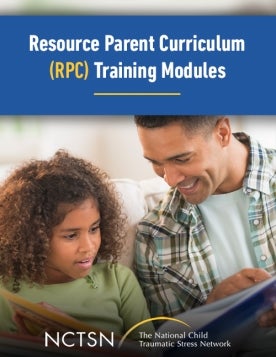
Resource Parent Curriculum (RPC) Training Modules [2]

Type: eLearning Course

Complements the Resource Parent Curriculum (RPC). This course is for resource families who are considering attending a RPC training to help them determine whether it would be worth their time to attend an entire workshop.

view [2]
NCTSN Resource

Complex Trauma: Facts for Directors, Administrators, and Staff in Residential Settings [3]

Type: Fact Sheet

Provides information for staff in residential treatment centers on how to understand behavior through a trauma lens.

view [3]
NCTSN Resource

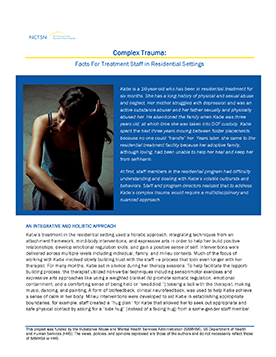
Complex Trauma: Facts for Treatment Staff in Residential Settings [4]

Type: Fact Sheet

Details the importance of a holistic, multidisciplinary, multi-level approach to addressing the needs of youth with complex trauma in residential treatment settings.

view [4]
NCTSN Resource

Going the Distance: Implementing the Child Welfare Trauma Training Toolkit in Three Organizations [5]

Type: Webinar

Shares how the Child Welfare Trauma Training Toolkit: 2nd Edition has been implemented in three different states by non-profit organizations, in partnership with their child welfare jurisdictions.

view [5]
NCTSN Resource

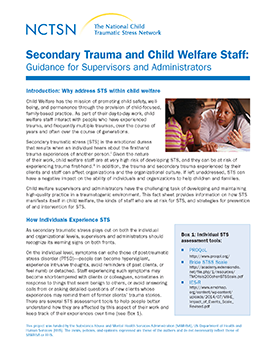
Secondary Trauma and Child Welfare Staff: Guidance for Supervisors and Administrators [6]

Type: Fact Sheet

Gives supervisors and administrators in the child welfare system the information on the importance of addressing secondary traumatic stress (STS).

view [6]
NCTSN Resource

Trauma and Loss Reminders [7]

Type: eLearning Course

Provides information about how traumatic events often generate secondary adversities such as family separations, financial hardship, relocations to a new residence and school, social stigma, ongoing treatment for injuries, physical rehabilitation, and legal proceedings.

view [7]
NCTSN Resource

Models of Trauma-Informed Integrated Care Part I: Comprehensive Care for Children and Youth in... [8]

Type: Webinar

Describes what comprehensive care for children in the child welfare system looks like.

view [8]
NCTSN Resource

Complexity of the Traumatic Experience [9]

Type: eLearning Course

Discusses how every traumatic event is made up of traumatic moments that may include varying degrees of objective life threat, physical violation, and witnessing of injury or death.

view [9]
NCTSN Resource

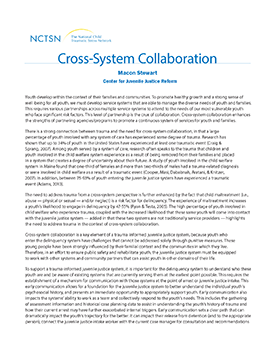
Cross-System Collaboration [10]

Type: Fact Sheet

Outlines practice examples for continuity of care and collaboration across systems, a vital activity for youth involved in multiple service systems. This brief, written by Macon Stewart from the Center for Juvenile Justice Reform describes its Youth Practice Model.

view [10]
NCTSN Resource

Practice Cards: Using Trauma-Informed Child Welfare Practice to Improve Placement Stability... [11]

Type: Special Resource

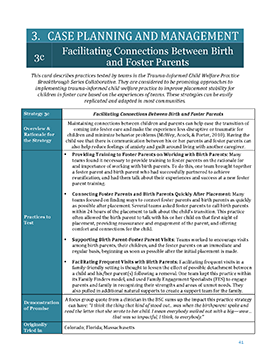
Describes promising approaches to implementing trauma-informed child welfare practice to improve placement stability for children in foster care.

view [11]
NCTSN Resource

Using Trauma-Informed Child Welfare Practice to Improve Placement Stability Breakthrough Series... [12]

Type: Resource Guide

Offers details about using trauma-informed child welfare practice to improve placement stability.

view [12]

Pages

  • FIRST [13]
  • PREVIOUS [14]
  • 1 [13]
  • 2 [14]
  • 3
  • 4 [15]
  • 5 [16]
  • NEXT [15]
  • LAST [16]

Source URL:https://nctsn.org/audiences/child-welfare-professionals?page=2

Links
[1] https://nctsn.org/resources/using-video-removed-resource-parents [2] https://nctsn.org/resources/resource-parent-curriculum-rpc-training-modules [3] https://nctsn.org/resources/complex-trauma-facts-directors-administrators-and-staff-residential-settings [4] https://nctsn.org/resources/complex-trauma-facts-treatment-staff-residential-settings [5] https://nctsn.org/resources/going-distance-implementing-child-welfare-trauma-training-toolkit-three-organizations [6] https://nctsn.org/resources/secondary-trauma-and-child-welfare-staff-guidance-supervisors-and-administrators [7] https://nctsn.org/resources/trauma-and-loss-reminders [8] https://nctsn.org/resources/models-trauma-informed-integrated-care-part-i-comprehensive-care-children-and-youth-child [9] https://nctsn.org/resources/complexity-of-the-traumatic-experience [10] https://nctsn.org/resources/cross-system-collaboration [11] https://nctsn.org/resources/practice-cards-using-trauma-informed-child-welfare-practice-improve-placement-stability [12] https://nctsn.org/resources/using-trauma-informed-child-welfare-practice-improve-placement-stability-breakthrough [13] https://nctsn.org/print/899 [14] https://nctsn.org/print/899?page=1 [15] https://nctsn.org/print/899?page=3 [16] https://nctsn.org/print/899?page=4