The National Child Traumatic Stress Network
Published on The National Child Traumatic Stress Network (https://nctsn.org)

Home > School Personnel

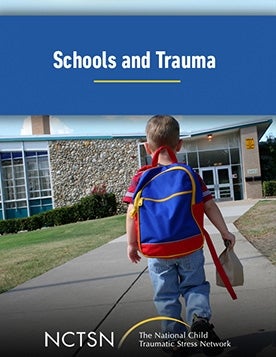
Research suggests that approximately 25% of American children will experience at least one traumatic event by the age of 16. A child's reactions to trauma can interfere considerably with learning and/or behavior at school. Schools serve as a critical system of support for children who have experienced trauma. Administrators, teachers, and staff can help reduce the effects of trauma on children by recognizing trauma responses, accommodating and responding to traumatized students within the classroom, and referring children to outside professionals when necessary. The National Child Traumatic Stress Network has developed tools and materials to help educators, school staff, and administrators understand and respond to the specific needs of traumatized children. In addition to the NCTSN resources highlighted below, School Personnel can learn more about creating trauma-informed schools in the Trauma-Informed Care section of this website.

NCTSN Resource

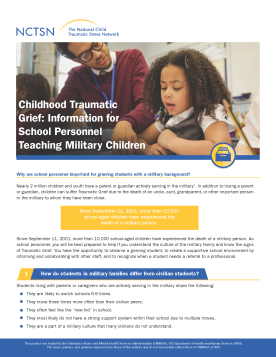
Childhood Traumatic Grief: Information for School Personnel Teaching Military Children [1]

Type: Fact Sheet

Offers information on why school personnel are important for grieving students with a military background. This fact sheet outlines how students in military families differ from civilian students, how students grieve, what Childhood Traumatic Grief is, who develops Childhood Traumatic Grief, what

view [1]
NCTSN Resource

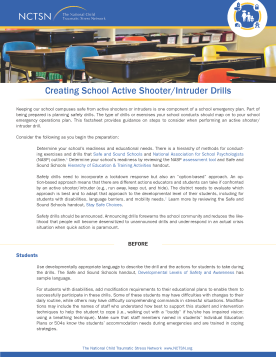
Creating School Active Shooter/Intruder Drills [2]

Type: Fact Sheet

Provides information to schools about how to create a trauma-informed active shooter/intruder drill. This fact sheet outlines the steps to take before, during, and after for students, school staff, and parents.

view [2]
NCTSN Resource

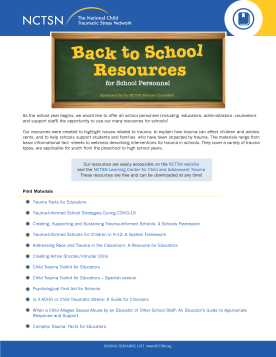
Back to School Resource List [3]

Type: Fact Sheet

is a list of NCTSN products that are useful for school staff and personnel. 

view [3]
NCTSN Resource

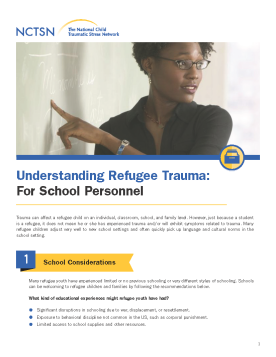
Understanding Refugee Trauma: For School Personnel [4]

Type: Fact Sheet

Outlines different considerations that school personnel need to take into account when working with refugee youth and their families. This fact sheet describes the school, classroom, individual, and family considerations that school staff should understand when working with this population.

view [4]
NCTSN Resource

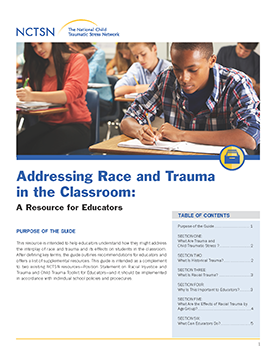
Addressing Race and Trauma in the Classroom: A Resource for Educators [5]

Type: Resource Guide

Helps educators understand how they might address the interplay of race and trauma and its effects on students in the classroom. The guide outlines recommendations for educators and offers a list of supplemental resources.

view [5]
NCTSN Resource

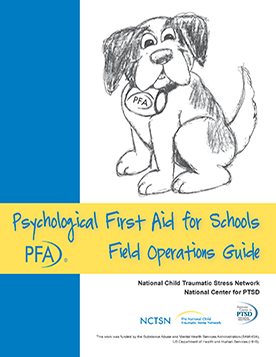
Psychological First Aid for Schools (PFA-S) Field Operations Guide [6]

Type: Special Resource

Provides guidance on responding to disaster, violence, or terrorism events using the Psychological First Aid intervention.

view [6]
NCTSN Resource

Educator Sexual Misconduct in Schools: Guidelines for Staff, Volunteers, and Community Partners [7]

Type: Webinar

Explores the importance of knowing the difference between appropriate and inappropriate school staff behavior with students.

view [7]
NCTSN Resource

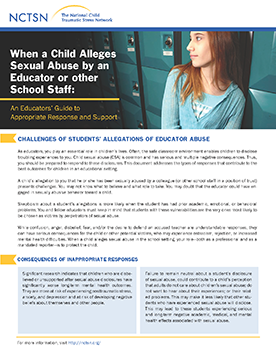
When a Child Alleges Sexual Abuse by an Educator or Other School Staff: An Educator’s Guide to... [8]

Type: Fact Sheet

Provides educators and school staff information on the challenges that occur when there is an allegation of educator abuse.

view [8]
NCTSN Resource

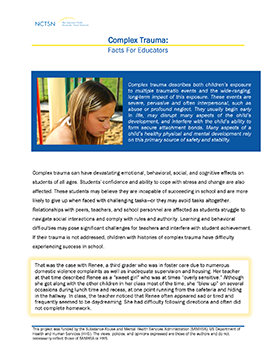
Complex Trauma: Facts for Educators [9]

Type: Fact Sheet

Helps educators and school staff recognize the signs and symptoms of complex trauma and offers recommendations on how to help students heal.

view [9]
NCTSN Resource

Understanding the Intersection Between Cyberbullying and Trauma [10]

Type: Webinar

Focuses on understanding the intersection between cyberbullying and trauma.

view [10]
NCTSN Resource

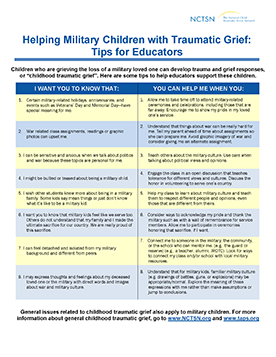
Helping Military Children with Traumatic Grief: Tips for Educators [11]

Type: Tip Sheet

Offers information on military children who are grieving the loss of a loved one. This tip sheet describes how military children dealing with trauma and grief responses may be feeling and what educators and school staff can do to help.

view [11]
NCTSN Resource

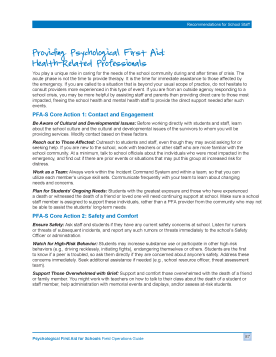
Providing Psychological First Aid: Health-Related Professionals [12]

Type: Fact Sheet

Offers school health professionals a quick resource for using the Core Actions of Psychological First Aid in response to an emergency event on school grounds.


view [12]

Pages

  • FIRST [13]
  • PREVIOUS [14]
  • 1 [13]
  • 2 [14]
  • 3
  • 4 [15]
  • 5 [16]
  • 6 [17]
  • NEXT [15]
  • LAST [17]

Source URL:https://nctsn.org/audiences/school-personnel?page=2

Links
[1] https://nctsn.org/resources/childhood-traumatic-grief-information-for-school-personnel-teaching-military-children [2] https://nctsn.org/resources/creating-school-active-shooter-intruder-drills [3] https://nctsn.org/resources/back-to-school-resource-list [4] https://nctsn.org/resources/understanding-refugee-trauma-school-personnel [5] https://nctsn.org/resources/addressing-race-and-trauma-classroom-resource-educators [6] https://nctsn.org/resources/psychological-first-aid-schools-pfa-s-field-operations-guide [7] https://nctsn.org/resources/educator-sexual-misconduct-schools-guidelines-staff-volunteers-and-community-partners [8] https://nctsn.org/resources/when-child-alleges-sexual-abuse-educator-or-other-school-staff-educators-guide-appropriate [9] https://nctsn.org/resources/complex-trauma-facts-educators [10] https://nctsn.org/resources/understanding-intersection-between-cyberbullying-and-trauma [11] https://nctsn.org/resources/helping-military-children-traumatic-grief-tips-educators [12] https://nctsn.org/resources/providing-psychological-first-aid-health-related-professionals [13] https://nctsn.org/print/901 [14] https://nctsn.org/print/901?page=1 [15] https://nctsn.org/print/901?page=3 [16] https://nctsn.org/print/901?page=4 [17] https://nctsn.org/print/901?page=5