
NCTSN Resource
Psychological and Behavioral Impact of Trauma: High School Students [1]
Type: Fact Sheet
Describes the psychological and behavioral impact of trauma on high school students.

Research suggests that approximately 25% of American children will experience at least one traumatic event by the age of 16. A child's reactions to trauma can interfere considerably with learning and/or behavior at school. Schools serve as a critical system of support for children who have experienced trauma. Administrators, teachers, and staff can help reduce the effects of trauma on children by recognizing trauma responses, accommodating and responding to traumatized students within the classroom, and referring children to outside professionals when necessary. The National Child Traumatic Stress Network has developed tools and materials to help educators, school staff, and administrators understand and respond to the specific needs of traumatized children. In addition to the NCTSN resources highlighted below, School Personnel can learn more about creating trauma-informed schools in the Trauma-Informed Care section of this website.
Describes the psychological and behavioral impact of trauma on high school students.
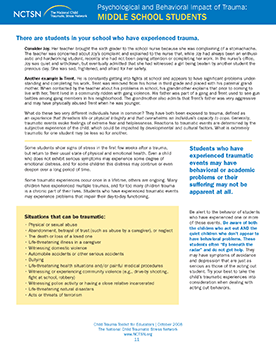
Describes the psychological and behavioral impact of trauma on middle school students.
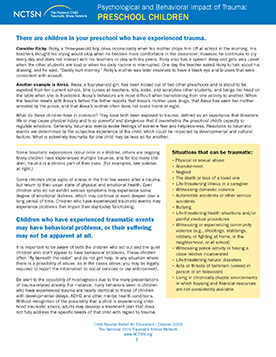
Describes the psychological and behavioral impact of trauma on preschool children.
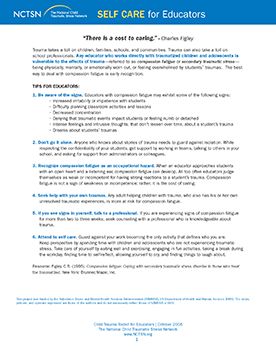
Highlights tips for educators on self-care. This tip sheet is a part of the Child Trauma Toolkit for Educators and includes information on working with traumatized children, and tips for school staff who work with any child who has experienced trauma.

Provides teachers with facts about the impact of trauma on students. This fact sheet, a part of the Child Trauma Toolkit for Educators, includes information on trauma reactions and how teachers can help.
Proporciona a administradores escolares, maestros, personal de la escuela y padres interesados, información básica sobre el trabajo con niños traumatizados en el sistema escolar. Esta es la versión en español de Child Trauma Toolkit for Educators.

Describes the psychological and behavioral impact of trauma on preschool children.
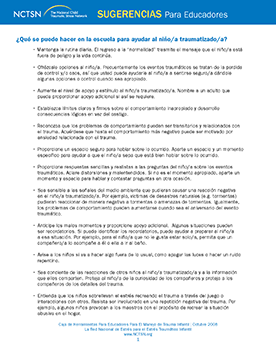
Offers suggestions for educators about what can be done at a school to help a traumatized child. This tip sheet, a part of Caja de Herramientas Para Educadores Para el Manejo de Trauma Infantil, describes very practical ways to help children who have experienced trauma while at school.
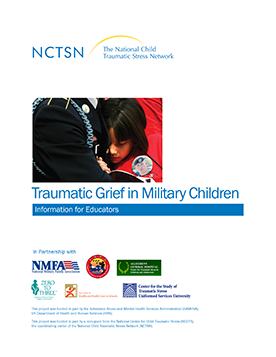
Provides educators with information about traumatic grief in military children.
Provides information for teachers and school personnel about children and teens who have had a loved one die in an earthquake.
Describes the cultural and family differences in children’s sexual education and knowledge.
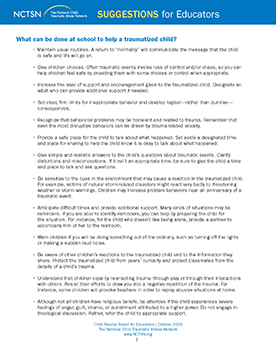
Offers suggestions to educators about what can be done at a school to help a traumatized child. This tip sheet describes very practical ways school staff can help children who have experienced trauma.
Links
[1] https://nctsn.org/resources/psychological-and-behavioral-impact-trauma-high-school-students
[2] https://nctsn.org/resources/psychological-and-behavioral-impact-trauma-middle-school-students
[3] https://nctsn.org/resources/psychological-and-behavioral-impact-trauma-preschool-children
[4] https://nctsn.org/resources/self-care-educators
[5] https://nctsn.org/resources/trauma-facts-educators
[6] https://nctsn.org/resources/caja-de-herramientas-para-educadores-para-el-manejo-de-trauma-infantil
[7] https://nctsn.org/resources/impacto-psicologico-y-conductual-del-trauma-ninos-preescolares
[8] https://nctsn.org/resources/sugerencias-para-educadores
[9] https://nctsn.org/resources/traumatic-grief-military-children-information-educators
[10] https://nctsn.org/resources/guidance-school-personnel-students-who-had-loved-one-die-earthquake
[11] https://nctsn.org/resources/culture-and-trauma-brief-cultural-and-family-differences-childrens-sexual-education-and
[12] https://nctsn.org/resources/suggestions-educators-helping-traumatized-children-school
[13] https://nctsn.org/print/901
[14] https://nctsn.org/print/901?page=3
[15] https://nctsn.org/print/901?page=1
[16] https://nctsn.org/print/901?page=2
[17] https://nctsn.org/print/901?page=5