The National Child Traumatic Stress Network
Published on The National Child Traumatic Stress Network (https://nctsn.org)

Home > Healthcare Providers

Wherever Healthcare Providers encounter children and families--whether in a clinic, hospital ER, school, or at a private outpatient practice--there are opportunities to integrate trauma-informed practices into the care families receive. The National Child Traumatic Stress Network has developed tools and materials to help physicians, nurses, and other healthcare professionals understand and respond to the specific needs of traumatized children. In addition to the NCTSN resources highlighted below, Healthcare Providers can learn more about trauma-informed integrated care in the Trauma-Informed Care section of this website.

NCTSN Resource

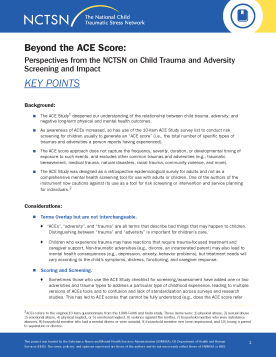
Beyond the ACE Score: Perspectives from the NCTSN on Child Trauma and Adversity Screening and... [1]

Type: Fact Sheet

Highlights key points for providers, family advocates, and policymakers to understand about Adverse Childhood Experiences (ACEs) and child trauma. This resource was adapted from...

view [1]
NCTSN Resource

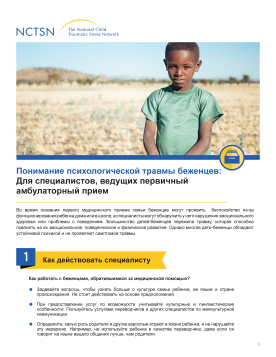
Understanding Refugee Trauma: For Primary Care Providers (in Ukrainian) [2]

Type: Fact Sheet

Outlines different considerations that primary care providers need to take into account when working wih reugee youth and their families.This fact sheet describes the cultural, child and youth, family, and provider considerations that healthcare providers should understand when working with this

view [2]
NCTSN Resource

Understanding Refugee Trauma: For Primary Care Providers (in Russian) [3]

Type: Fact Sheet

Outlines different considerations that primary care providers need to take into account when working with refugee youth and their families.

view [3]
NCTSN Resource

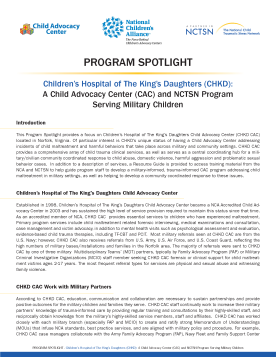
Program Spotlight Children's Hospital of the King's Daughters [4]

Type: Special Resource

Provides a focus on Children's Hospital of the King's Daughters Advocacy Center.

view [4]
NCTSN Resource

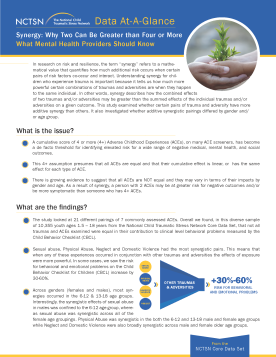
Data At-A-Glance: Synergy: Why Two Can Be Greater than Four or More [5]

Type: Fact Sheet

Offers providers information about synergy for children who experience trauma. This fact sheet is a summary of important points from a NCTSN Core Data Set publication developed to help providers understand whether certain pairs of trauma and adversity have more additive synergy than others.

view [5]
NCTSN Resource

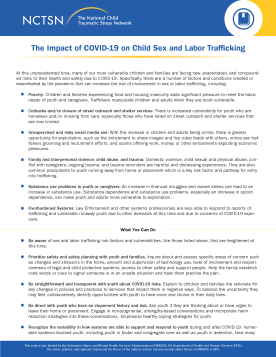
The Impact of COVID-19 on Child Sex and Labor Trafficking [6]

Type: Fact Sheet

Describes how the impact and consequences of COVID-19 increase the risk of involvement in sex or labor trafficking. This fact sheet offers infromation on what you can do as a provider and how to support yourself. 

view [6]
NCTSN Resource

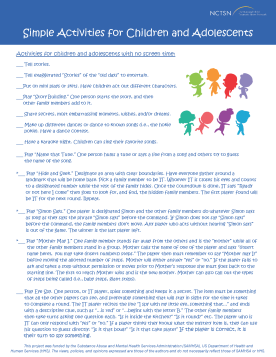
Simple Activities for Children and Adolescents [7]

Type: Fact Sheet

Offers activity ideas to parents and caregivers whose families are sheltering in place, evacuating their homes, or social distancing due to any type of disaster or event. 


view [7]
NCTSN Resource

Sexual Health and Trauma [8]

Type: Fact Sheet

Provides information about sexual health to providers. This fact sheet discusses what sexual health is, the challenges providers face when talking about sexual health, sexual health principles, as well as how trauma impacts sexual health conversations. 

view [8]
NCTSN Resource

Childhood Traumatic Grief: Information for Pediatric Providers [9]

Type: Fact Sheet

Offers information on why pediatric providers are important for grieving children. 

view [9]
NCTSN Resource

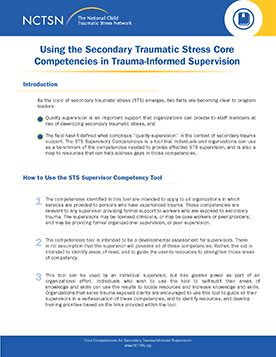
Using the Secondary Traumatic Stress Core Competencies in Trauma-Informed Supervision [10]

Type: Fact Sheet

Discusses the importance of quality supervision that organizations can provide to staff members at risk for secondary traumatic stress (STS).

view [10]
NCTSN Resource

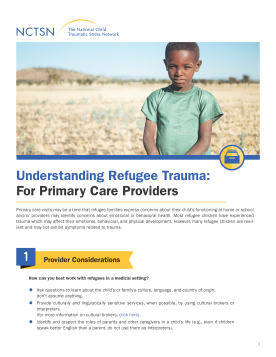
Understanding Refugee Trauma: For Primary Care Providers [11]

Type: Fact Sheet

Outlines different considerations that primary care providers need to take into account when working with refugee youth and their families.

view [11]
NCTSN Resource

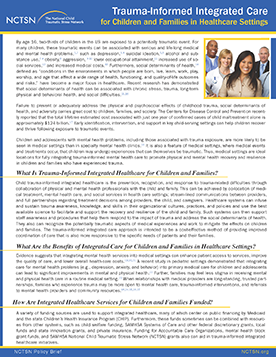
Trauma-Informed Integrated Care for Children and Families in Healthcare Settings [12]

Type: Fact Sheet

Provides policymakers and other stakeholders an overview of trauma-informed integrated care and its importance for children who have experienced trauma.

view [12]

Pages

  • FIRST [13]
  • PREVIOUS [13]
  • 1 [13]
  • 2
  • 3 [14]
  • 4 [15]
  • 5 [16]
  • NEXT [14]
  • LAST [16]

Source URL:https://nctsn.org/audiences/healthcare-providers?page=1

Links
[1] https://nctsn.org/resources/beyond-the-ace-score-perspectives-from-the-nctsn-on-child-trauma-and-adversity-screening-and-impact-key-points [2] https://nctsn.org/resources/understanding-refugee-trauma-for-primary-care-providers-uk [3] https://nctsn.org/resources/understanding-refugee-trauma-for-primary-care-providers-ru [4] https://nctsn.org/resources/program-spotlight-childrens-hospital-of-the-kings-daughters [5] https://nctsn.org/data-at-a-glance-synergy-why-two-can-be-greater-than-four-or-more [6] https://nctsn.org/resources/the-impact-of-covid-19-on-child-sex-and-labor-trafficking [7] https://nctsn.org/resources/simple-activities-children-and-adolescents [8] https://nctsn.org/resources/sexual-health-and-trauma [9] https://nctsn.org/resources/childhood-traumatic-grief-information-for-pediatric-providers [10] https://nctsn.org/resources/using-secondary-traumatic-stress-core-competencies-trauma-informed-supervision [11] https://nctsn.org/resources/understanding-refugee-trauma-primary-care-providers [12] https://nctsn.org/resources/trauma-informed-integrated-care-children-and-families-healthcare-settings [13] https://nctsn.org/print/902 [14] https://nctsn.org/print/902?page=2 [15] https://nctsn.org/print/902?page=3 [16] https://nctsn.org/print/902?page=4