
NCTSN Resource
Trauma-Informed Parenting: How to Talk Trauma with an MD [1]
Type: Webinar
Features a trauma-informed caregiver discussing how to partner with a variety of providers including pediatricians.

Wherever Healthcare Providers encounter children and families--whether in a clinic, hospital ER, school, or at a private outpatient practice--there are opportunities to integrate trauma-informed practices into the care families receive. The National Child Traumatic Stress Network has developed tools and materials to help physicians, nurses, and other healthcare professionals understand and respond to the specific needs of traumatized children. In addition to the NCTSN resources highlighted below, Healthcare Providers can learn more about trauma-informed integrated care in the Trauma-Informed Care section of this website.
Features a trauma-informed caregiver discussing how to partner with a variety of providers including pediatricians.

Discusses an integrated approach to recognizing and responding to child and family traumatic stress when a child has cancer.

Offers information on integrated care approaches to supporting children and families dealing with traumatic stress and chronic health conditions.

Explores the common reasons CSEC youth seek care, as well as challenges to victim identification.

Provides information about how traumatic events often generate secondary adversities such as family separations, financial hardship, relocations to a new residence and school, social stigma, ongoing treatment for injuries, physical rehabilitation, and legal proceedings.

Provides a trauma-informed integrated healthcare model for conceptualizing young children exposed to violence and other traumatic stressors.

Lays a groundwork of fundamental knowledge about integrated health care and how it relates to trauma.

Provides information to children who have experienced medical trauma.
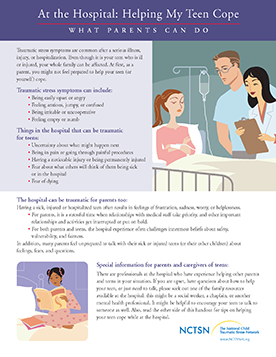
Offers parents guidance to parents about how to support your teen while at the hospital before, during, or after a medical procedure.

Offers activities and a scenario for youth who have been ill or injured to help understand what it is they might be feeling.
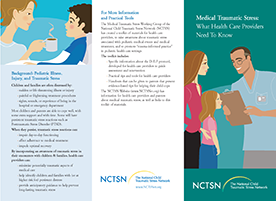
Provides a brief overview of medical traumatic stress, the D-E-F protocol (Reduce Distress, Promote Emotional Support, and Remember the Family) and traumatic stress reactions.
Outlines how to use the Pediatric Medical Traumatic Stress Toolkit for Health Care Providers effectively.
Links
[1] https://nctsn.org/resources/trauma-informed-parenting-how-talk-trauma-md
[2] https://nctsn.org/resources/helping-family-traumatic-stress-when-child-has-cancer
[3] https://nctsn.org/resources/integrated-care-approaches-traumatic-stress-children-chronic-health-conditions
[4] https://nctsn.org/resources/health-care-needs-commercially-sexually-exploited-youth-challenges-survivors-and-medical
[5] https://nctsn.org/resources/trauma-and-loss-reminders
[6] https://nctsn.org/resources/models-trauma-informed-integrated-care-part-ii-identifying-and-responding-early-childhood
[7] https://nctsn.org/resources/trauma-informed-integrated-healthcare
[8] https://nctsn.org/resources/after-hospital-getting-back-schedule
[9] https://nctsn.org/resources/hospital-helping-my-teen-cope-what-parents-can-do
[10] https://nctsn.org/resources/making-plan-dealing-things-remind-you-what-happened-medical-trauma
[11] https://nctsn.org/resources/medical-traumatic-stress-what-health-care-providers-need-know
[12] https://nctsn.org/resources/pediatric-medical-traumatic-stress-toolkit-your-guide-using-toolkit-effectively
[13] https://nctsn.org/print/902
[14] https://nctsn.org/print/902?page=1
[15] https://nctsn.org/print/902?page=3
[16] https://nctsn.org/print/902?page=4