The National Child Traumatic Stress Network
Published on The National Child Traumatic Stress Network (https://nctsn.org)

Home > Healthcare Providers

Wherever Healthcare Providers encounter children and families--whether in a clinic, hospital ER, school, or at a private outpatient practice--there are opportunities to integrate trauma-informed practices into the care families receive. The National Child Traumatic Stress Network has developed tools and materials to help physicians, nurses, and other healthcare professionals understand and respond to the specific needs of traumatized children. In addition to the NCTSN resources highlighted below, Healthcare Providers can learn more about trauma-informed integrated care in the Trauma-Informed Care section of this website.

NCTSN Resource

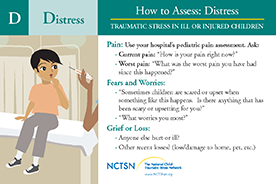
Pediatric Medical Traumatic Stress: How to Assess and Help - Distress [1]

Type: Special Resource

Provides tips for medical professionals on how to assess distress in ill or injured children and how to help their families.

view [1]
NCTSN Resource

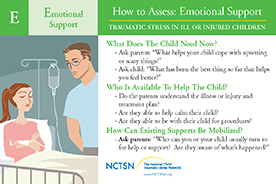
Pediatric Medical Traumatic Stress: How to Assess and Help - Emotional Support [2]

Type: Special Resource

Provides tips for medical professionals on how to assess emotional support in ill or injured children and how to help their families.

view [2]
NCTSN Resource

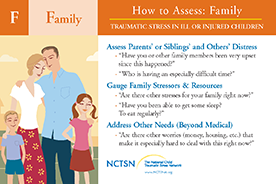
Pediatric Medical Traumatic Stress: How to Assess and Help - Family [3]

Type: Special Resource

Provides tips for medical professionals on how to assess a family of ill or injured children and how to help their families.

view [3]
NCTSN Resource

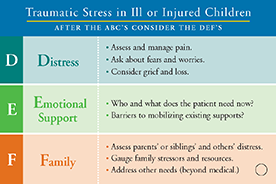
Traumatic Stress in Ill or Injured Children: After the ABC'S Consider the DEF's [4]

Type: Special Resource

Offers information about distress, emotional support, and working with families after a medical trauma. These reference cards are a way to quickly screen if a parent, caregiver, or child is at risk for ongoing traumatic stress reactions after a medical procedure or trauma.

view [4]
NCTSN Resource

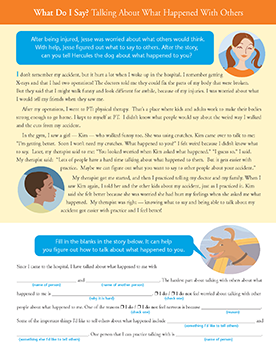
What Do I Say? Talking about What Happened with Others [Medical Trauma] [5]

Type: Fact Sheet

Provides information to youth about how to talk about medical trauma with others. This tip sheet, a part of the Pediatric Medical Traumatic Stress Toolkit, includes a scenario to read that describes how therapy helped the youth in the story.

view [5]
NCTSN Resource

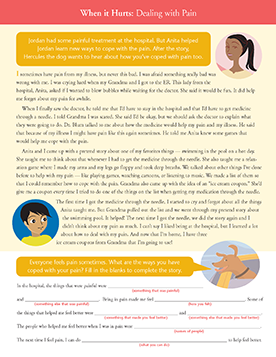
When It Hurts: Dealing with Pain [6]

Type: Fact Sheet

Provides children with information and activities to help cope with pain after an injury, illness, or medical stay.

view [6]
NCTSN Resource

Models of Trauma-Informed Integrated Care Part I: Comprehensive Care for Children and Youth in... [7]

Type: Webinar

Describes what comprehensive care for children in the child welfare system looks like.

view [7]
NCTSN Resource

Complexity of the Traumatic Experience [8]

Type: eLearning Course

Discusses how every traumatic event is made up of traumatic moments that may include varying degrees of objective life threat, physical violation, and witnessing of injury or death.

view [8]
NCTSN Resource

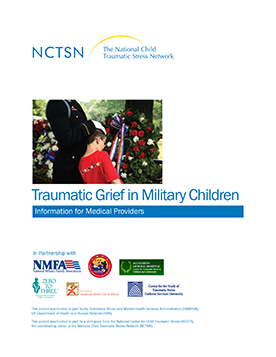
Traumatic Grief in Military Children: Information for Medical Providers [9]

Type: Fact Sheet

Provides medical providers with information about traumatic grief in military children.

view [9]
NCTSN Resource

Impact of Trauma on Early Brain Development [10]

Type: Webinar

Synthesizes research and clinical knowledge about typical brain development and the high impact that the stress response has on the developing brain. This webinar highlights the clinical application for clinicians and other professionals who work with traumatized children.

view [10]
Partner-In Resource

Trauma ScreenTIME [11]

Type: Website

Provides staff in child-serving systems with best practices for trauma screening.

view [11]
Partner-In Resource

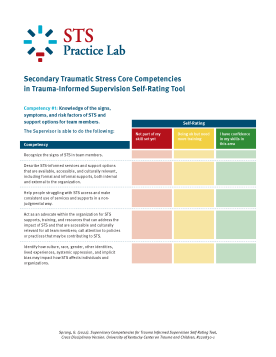
Secondary Traumatic Stress Core Competencies in Trauma-Informed Supervision Self-Rating Tool [12]

Type: Special Resource

Is a self-rating tool that walks users through each of the competencies in STS cross-disciplinary version. 

view [12]

Pages

  • FIRST [13]
  • PREVIOUS [14]
  • 1 [13]
  • 2 [15]
  • 3 [14]
  • 4
  • 5 [16]
  • NEXT [16]
  • LAST [16]

Source URL:https://nctsn.org/audiences/healthcare-providers?page=3

Links
[1] https://nctsn.org/resources/pediatric-medical-traumatic-stress-how-assess-and-help-distress [2] https://nctsn.org/resources/pediatric-medical-traumatic-stress-how-assess-and-help-emotional-support [3] https://nctsn.org/resources/pediatric-medical-traumatic-stress-how-assess-and-help-family [4] https://nctsn.org/resources/traumatic-stress-ill-or-injured-children-after-abcs-consider-defs [5] https://nctsn.org/resources/what-do-i-say-talking-about-what-happened-others-medical-trauma [6] https://nctsn.org/resources/when-it-hurts-dealing-pain [7] https://nctsn.org/resources/models-trauma-informed-integrated-care-part-i-comprehensive-care-children-and-youth-child [8] https://nctsn.org/resources/complexity-of-the-traumatic-experience [9] https://nctsn.org/resources/traumatic-grief-military-children-information-medical-providers [10] https://nctsn.org/resources/impact-trauma-early-brain-development [11] https://nctsn.org/resources/trauma-screentime [12] https://nctsn.org/resources/secondary-traumatic-stress-core-competencies-in-trauma-informed-supervision-cross-disciplinary-self-rating-tool [13] https://nctsn.org/print/902 [14] https://nctsn.org/print/902?page=2 [15] https://nctsn.org/print/902?page=1 [16] https://nctsn.org/print/902?page=4