The 12 Core Concepts for Understanding Traumatic Stress Responses in Children and Families (one...
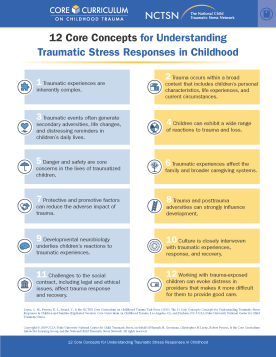
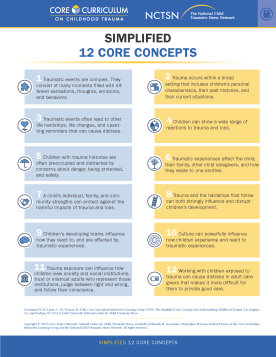
Offers the 12 Core Concepts for Understanding Traumatic Stress Responses in Children and Families on one quick reference sheet.
The following resources on the Core Curriculum were developed by the NCTSN.

Offers the 12 Core Concepts for Understanding Traumatic Stress Responses in Children and Families on one quick reference sheet.

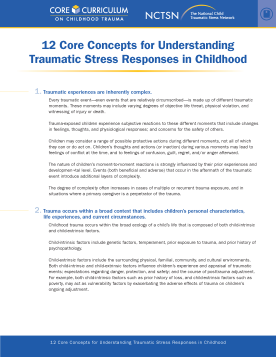
Is a more accessible version of the 12 Core Concepts, written with simplified language to support understanding across a range of literacy levels and learning needs. It is especially useful for audiences unfamiliar with clinical terms or new to trauma concepts.

Offers a bulleted version of the 12 Core Concepts for Understanding Traumatic Stress Responses in Children and Families.

Outlines and describes the 12 Core Concepts: Concepts for Understanding Traumatic Stress Responses in Children and Families. Translated in 2024.

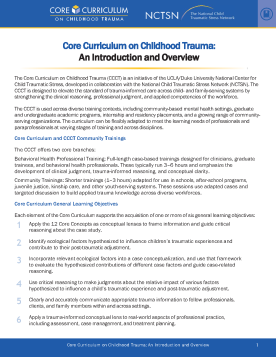
Provides an introduction and overview to the NCTSN Core Curriculum on Childhood Trauma (CCCT). This fact sheet offers information on the CCCT including its strengths-based approach, learning objectives, its elements, and its case studies.
Helps learners to create a trauma lens through which they can view and better comprehend the effects of traumatic experiences and losses.

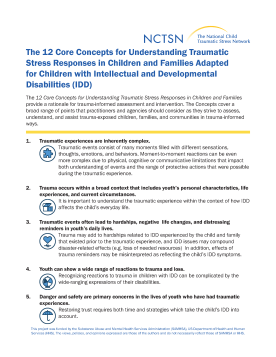
Outlines and describes a range of points that practitioners and agencies should consider as they strive to assess, understand, and assist youth and families with children living with disabilities who have experienced trauma.

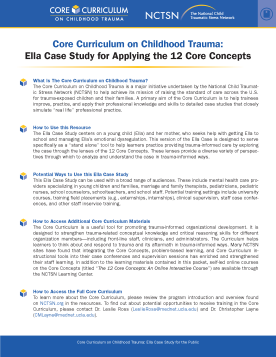
Guides users in applying the 12 Core Concepts to "real-world" case material, with the goal of strengthening trauma-informed professionalism for a broad range of audiences.

Describe Los 12 Conceptos Centrales: Conceptos para entender las reacciones al estrés traumático en los niños y sus familias.
Offers information about how to work with children and use a developmental lens.

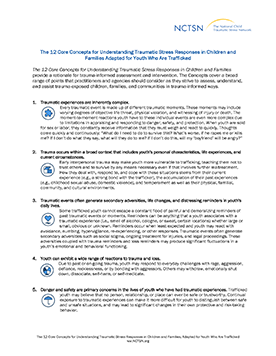
Outlines and describes a range of points that practitioners and agencies should consider as they strive to assess, understand, and assist youth who are trafficked.
Provides information about how traumatic events often generate secondary adversities such as family separations, financial hardship, relocations to a new residence and school, social stigma, ongoing treatment for injuries, physical rehabilitation, and legal proceedings.